Google+
Showing posts with label concord. Show all posts

Thursday, December 10, 2009

EC invites to comment on Issues Paper on Agriculture and Food Security

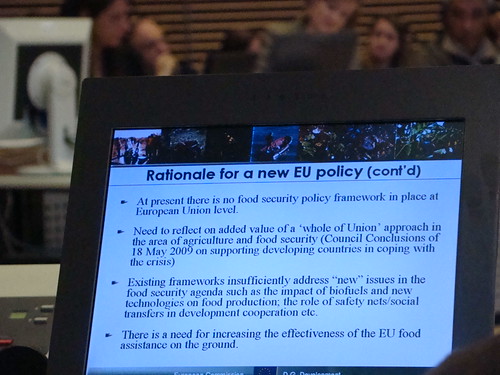
Food Security and Agriculture are very much back on the agenda. Building on its Food Security Thematic Strategy Paper 2007-2010, the European Commission is currently developing a new Policy Framework to assist developing countries addressing agriculture and food security challenges. On 9 december 2009, at the CTA organized Brussels Briefing “From Global Food Crisis to Local Food Insecurity”, the Directorate General for Development elaborated on its Issues Paper on food security.

DSC01913


The new policy framework will build on central elements of the past framework:

• The aim remains not simply to deliver food aid but to achieve Food Security for all
• Maintain a link between relief and protecting sustainable livelihoods and crisis prevention
• Address four pillars: availability (1), access (2), quality and utilization (3), and crisis management and prevention (4)

The Issues Paper was published 16 november 2009 and is part of the consultation and policy development process which has to lead to Council Conclusions – an official statement of the ministers of EU members states – on a Policy Framework on Agriculture and Food Security in May 2010.

Until 9 January 2010 you can voice you opinion about the Issues Paper at www.ec.europa.eu/yourvoice/consultations


Several participants at the Brussels Briefing organised by CTA commented on the presentation by the DG-Development representative. ActionAid welcomes the EC initiative but feels the Commission has no long term approach to investment in agriculture and food security. Also, according to ActionAid, the EC approach lacks attention for women’s access to credit, land and services. For example, compared to an earlier version, the chapter on agriculture has been removed from the current version of the EC Gender Action plan, a document stakeholders may comment on next week. ActionAid also warns about the so-called “whole of union approach” that the Commision wishes to explore in connection with issues of Food Security. This approach suggests that members states – besides official development cooperation - use all kinds of other resources to achieve development objectives. However, ActionAid and Concord are concerned that the "whole of the union" approach is more about “counting all resources” as opposed to really “using all resources”.

Subscribe to the euforic newsfeeds on food security and eu cooperation for more news

Monday, October 26, 2009

European Development Days 2009: the power of networking

Last week Stockholm hosted the European Development Days, a three day event involving a number of heads of State and thousands of development professionals and students from all over Europe, indeed the world. You can read it all on the official EDD-website.

Even though Euforic – as readers of this blog will know – is scaling down its operations, we were present in Stockholm to promote one of the many exciting projects Euforic has been involved in over the last few years: R4D, an information service providing free access to information on DFID (co)financed research for development programs and over 20,000 outputs of these research efforts.

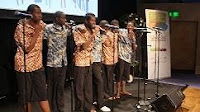
Several Euforic members presented panel discussions at the European Development Days, or the Development D-days as Rajendra Pachauri, Director General of the Energy Resources Insitute in New Delhi and one of the keynote speakers, called them. CTA invited twelve partners from the South to have stands at the Development Village and organized an important event about land acquisition (also known as “land grabbing”). At an event co-organized by AFD, Koos Richelle, head of AIDCO and others examined aid practices. AFD also organized with DFID and DIE a debate about the evolving aid architecture. Concord co-organized an event about development education, sharing ideas and experiences around involving and mobilizing citizens for development. Citizens were also central to the ECDPM-organized event about the EU-Africa Partnership. EADI together with the Development Gateway Foundation looked at the future of European Development Cooperation: Development Beyond 2015 and APRODEV, CIDSE and Concord staged an event on Copenhagen, Climate Justice and the Right to Development. SNV had a session on Accountability and Transparency and cheered us all up with a musical spectacle at the end of the second day.
Most events attracted quite some interest. A crowd of EDD-visitors lined-up outside the forum on Media and Development. In the panel, Ellen Johnson-Sirleaf, President of Liberia, Raile Odinga, Prime Minister of Kenya, blogger and digital activist Ndesanjo Macha and others discussed the role of media in development. Dominique Darmon of SNV was lucky to get in and reported that there was an extensive discussion around the role of new media. Nowadays in Africa over 17 million phones are in use ... or at least, in use when there is electricity, as Ellen Johnson-Sirleaf noted, underlining that energy and infrastructure are critical priorities for investment in this continent. Odinga explained how he used a blog to communicate with the electorate during the recent presidential election campaign in Kenya, but someone in the audience noted that comments from readers of the blog were screened and the comments criticizing Odinga actually never made it to his blog. So new media can promote interaction and participation but they do not eliminate exclusion, whether because of lack of electricity or because of censorship.

Written communication does not reach too many Africans because of the high illiteracy rates, television is important but technically much more demanding than radio which is the number one “old” means of communication in the continent. At the same time, mobile devices are changing the way the good old radio is operating, boosting its use through for example podcast. During the session several other examples of mobile phone use were highlighted for example how they were used to warn people during recent floodings in Burkina Faso. Phones can also be used to hold the government accountable as the HIVOS/SNV project Twaweza demonstrates.

Some participants in the audience felt that new media pose a greater risk of misinformation while others laud their potential to promote democracy. A BBC reporter asked the politicians in the panel what at the end of the day would make them more uncomfortable: a bad news paper story, or a critical blog ... thus showing that the good old newspaper remains critically important.

Having to attend my R4D stand in the Development Village I saw few live presentations. But I made an exception for the “testimonies” on climate change that were given in the morning of the last day, 25 October. Michelle Duvivier Pierre-Louis, Prime Minister of Haiti and former executive of the Soros-sponsored Knowledge and Freedom Foundation told about the seven (7) hurricanes that hit her country over the last few years and asked for fairness and just reparations as part of the strategy to confront the climate change crisis, “The market mechanism is not going to save the planet”, she insisted. Moderator Sackur, known from BBC’s “Hard Talk” highlighted her systematic emphasis on fairness and justice and he asked her whether – when talking with European leaders, she felt they actually “got it”. Very honestly she replied that her gut feeling was not very good, but she also made it clear she will not give up fighting for climate justice.

President Emanual Manny Mori of the Federated States of Micronesia explained how his country has been fighting for climate justice for quite some time already. The small islands state is very much exposed to the potentially disastrous effects of the sea level increase. To anyone who doubts whether this is a serious crisis he urged to reflect “Who are you fooling? Not the oceans and disappearing species”. Mori insisted that all nations will have to bite the bullet: “We will face a different world in our lifetime”

Mary Simon has been an activist for Inuit interests for decades. “My homeland is melting” she stated, “the situation is terrifying, villages just sink in the ground because of melting permafrost”. The changes may very well exceed the traditional capacities op her people to adapt. Simon concludes that previous efforts to reduce carbon emissions have not done the job, public policies have fallen short and emissions have continued to grow. Simon stressed the interrelation between economic and environmental security and calls for massive investments in clean technology. A Climate Change Adaptation Fund of 20 billion euro needs to become operational now, not by 2022 as current proposals suggest. Besides climate change, Simon also warned for what she labeled to be misguided policies that affect the Inuit people like the upgrade in CITES of the polar bear which makes them an endangered species, and the EU ban on seal products. It is climate change that endangers the polar bear, she said, Inuit hunting practices are sustainable. She felt that such policies negatively affect the Inuits capacity to adapt and preserve their livelihoods.

Back at my R4D stand, I listened to Margot Wallström, Vice-President of the European Commission, through a video live-stream. She said that the political realities will force the EU to be more ambitious about reduction of CO2 emission and deliver climate justice. With Michelle Duvivier and the others we continue to hope (but fear her gut feeling).

For more stories on the European Development Days, check the official EDD-site and sites of Euforic member organizations.

by Rosien Herweijer

See also Euforic's newsfeeds on Euforic cooperative life on European Development Days and on Information, knowledge, and communication

Tuesday, October 06, 2009

The 'Whole-of-Union Approach' and what it means for EU Development Policy

Recently the EC published a communication on 'Policy Coherence for Development' focusing on the establishment of a policy framework for a ‘Whole-of-the-Union Approach’(see pdf).

Now the European NGO Confederation CONCORD reacted on the communication in a policy briefing (see doc-file). CONCORD welcomes the proposal to take a more systematic and strategic approach to Policy Coherence. It welcomes the EU's wish to engage developing countries in dialogue on policy coherence.

According to the ‘Whole-of-the-Union Approach’ the Union would move towards a more holistic relationship with developing countries. One key element should be the ‘ODA plus’ concept which means to count not just official aid (ODA) but a variety of other ‘financial flows’ such as private investment, technology transfer, and research as a contribution to development.

According to CONCORD this poses a major shift in EU development cooperation away from ODA towards a wider range of sources with a questionable development impact and delivered with non-development objectives in mind. Such a process would go along with the current situation where several EU member states fail to meet their aid targets.

“Despite the rhetoric, the EU seems to be abandoning the focus on policy coherence for development and moving towards a self-interested development agenda”
the Concord briefing says.

CONCORD calls for a firm recommitment from member states to meet their aid promises and for any approach to policy coherence for development to be focused on the protection of developing countries from harmful effects of EU policies, rather than promoting EU interests.

For more information, check out Euforic's newsfeeds on Concord and the Euforic dossier and newsfeed on policy coherence.

Tuesday, September 08, 2009

Vacancy: Concord is seeking an Policy Manager

CONCORD is the European confederation representing, through its members, over 1600 European NGOs for relief and international development. CONCORD leads reflection and political actions on key development issues and regularly engages in dialogue with EU institutions and other civil society organizations.

Since its creation in 2003, CONCORD has been managing a growing membership and an increased number of processes. To oversee the internal workload generated by CONCORD’s diverse activities, CONCORD is seeking an experienced POLICY MANAGER.

The manager will manage the policy department overall, overseeing planning and implementation of agreed strategies, supervising staff and managing directly and indirectly CONCORD’s policy – related the working groups. She/he will act as senior adviser to the Director and to the Board on policy issues and lead on CONCORD’s institutional relations and dialogue. As a member of the Management Team he/she will be co-responsible for the achievement of CONCORD’s organizational mission and goals.

The successful candidate will have demonstrable people management skills, knowledge of how to influence EU decision making through advocacy and effective communications, excellent networking skills and demonstrate the ability to think strategically. She/he will speak English and French, have direct experience of the NGO sector and experience of working in a multicultural environment.

The position is based in Brussels.

For further information about this exciting opportunity go to www.concordeurope.org/. Click here to see the full job description. Applicants are invited to submit a CV and cover letter in English or French by 15 September to secretariat@concordeurope.org . Interviews will take place on 17th September.

Wednesday, July 15, 2009

Spring Alliance to ensure that the EU puts people and the planet first

The 'Spring Alliance' is a movement created by the European civil society organizations: the European Environmental Bureau, the European Trade Union Confederation and Social Platform. It was recently joined by Concord, the European NGO Confederation for Relief and Development. Furthermore the Alliance is supported by a network of organizations from all corners of civil society and beyond.

According to the initiators the Spring Alliance aims to shift the policy focus of the European Union from 'growth and jobs' towards more sustainable policies which prioritizes the welfare of Europe's people and puts the planet first. In the light of a newly elected European Parliament and the upcoming changes in the European Commission the network wants to ensure that the policies of the European Union pursue simultaneously economic, environmental and social goals.

To find out more see the Manifesto of the Spring Alliance or visit its website.

Fore more information, also check Euforic's newsfeed on EU cooperation policy

Tuesday, July 14, 2009

CSO Development effectiveness: the key event of the Czech Presidency

Source: Concord Flash 62, June 2009

What are the key principles of development effectiveness? What is the specific role of Civil Society Organisations (CSOs) in development that could best contribute to their full potential? How is effectiveness influenced by external conditions and how to turn these conditions into advantages? These are the questions that were debated on 23-24 June by 170 representatives from civil society organisations (CSOs), donors and governments from nearly 50 countries from around the world that gathered in Prague.

Organised by the Czech NGDO platform “FoRS” (in collaboration with CONCORD) this conference was the closing event of the FoRS programme under the Czech Presidency of the European Union. Participants discussed the principles guiding their development effectiveness, the roles of CSOs in development and the framework provided by donors and governments for CSO work.

The opening sessions presented different perspectives on CSO development effectiveness, including from Europe, Africa, Latin America and the Open Forum for CSO Development Effectiveness. Additional workshops explored more details topics such as: sustainable technologies; migration and development; inclusive development; gender; democratic governance, agriculture and food security. The conference concluded with a lively discussion on the conference statement which sets out principles of CSO development effectiveness. Participants committed to deepen discussions of these principles within the Open Forum for CSO effectiveness.

Just 2 days before this conference, this Open Forum held a meeting to discuss how to organise their political dialogue with donors and government, funding issues, and how international CSO processes linked to the development effectiveness agenda (Open Forum and Better Aid) could be sufficiently funded.

Political dialogue: One of the key objectives of the Open Forum is to advocate for an enabling environment for CSOs as development actors. This should be achieved through a multi-level political dialogue that also includes those governments and donors that have so far remained reluctant to engage with civil society. To facilitate this dialogue, a group of supportive governments including Austria, Sweden, Canada and the UK, have mobilised their peers to create a multi-stakeholder working group linked to the OECD DAC Working Party on Aid Effectiveness. This working group will reach out to donors and governments and work on some CSO-specific provisions in the Accra Agenda for Action in the run-up to the next High-Level Forum in 2011.

Funding: A management group has been established. It will work closely with donors and with CONCORD for the Open Forum and IBON for Better Aid. Tentative commitments have been made by some donors, and it is expected that these will translate into concrete pledges in the weeks to come.

For further information contact Franz Josef Berger or visit www.cso-effectiveness.org and www.fors.cz/en/eu_presidency/seminars_conferences

Also check out Euforic's newsfeeds on Concord, aid effectiveness, and on the EU Presidency

A word from Simon Stocker on Europe under the Lisbon Treaty

Source: Concord Flash 62, June 2009

Which Development for the new Europe?
The newly elected Members of the European Parliament will be faced with critical challenges during their five year term of office. While uncertainty remains over the future of the Lisbon Treaty, Parliament will undoubtedly oversee the implementation of many of the Treaty’s provisions. This is important for the European Union’s relations with the rest of the world. The Treaty seeks to strengthen the Union’s role in the world through enhancing its common foreign policy capacity - an objective that is to be welcomed.

Throughout the EU’s 50 year history its development cooperation has been the centre piece of its external policy. As a collective group of nations, the EU continues to provide more than 50% of the world’s official development aid, a position that brings some responsibility for ensuring that the Union’s relations with developing countries are pursued first and foremost in accordance with its development policy. However, this cannot be achieved through aid alone.

The EU’s identity through development cooperation

The Lisbon Treaty should re-enforce the EU’s position as a global leader in development. It reflects the emphasis of development cooperation as a nurturing policy in international relations, recognising this in the context of the Union’s expanding membership. It identifies development cooperation as an independent policy area with EU competency providing the principal framework for the EU’s relations with all developing countries, and sets the eradication of poverty as the single principle objective of this policy.

In so doing it establishes the relationship of this overarching objective to other external policy areas. The objective of poverty eradication must be taken into account when actions relating to other policies are planned and implemented, thereby establishing a hierarchical relationship in relation to the EU’s approaches to developing countries.

A key question will be how the inevitable reforms to the institutions ensure the effective implementation of the Lisbon Treaty’s provisions and intentions. They will need to ensure that there is a single dedicated development service within the Commission embracing the EU’s relations with all developing countries that guarantees development as an independent policy area. Not only regarding aid delivery, but also with the capacity to assert the political interests of the Union’s development policy. This requires an experienced Commissioner for Development and Humanitarian Aid sitting as an equal with all other Commissioners in the college. The creation of the Union’s diplomatic service must respect the integrity of development and humanitarian aid as a Community Policy.

In the words of Mirjam van Reisen, author of Window of Opportunity – EU Development Cooperation after the Cold War, “EU development policy reflects the EU’s identity and the importance given to values expressed in the slogan ‘unity through diversity’ - upholding international human rights, supporting accountable and inclusive democracies, creating conducive environments for the involvement of women in peace-building and conflict resolution; and creating sustainable economies with regulatory frameworks that
protect against excessive gaps between rich and poor.”

Simon Stocker, Director of Eurostep, member of the CONCORD Policy Forum

For more information, check out Euforic's newsfeeds on Concord, Eurostep, and on EU cooperation

Friday, June 05, 2009

What our members are doing on climate change

Climate change is high on the international agenda these days. During the UN Climate Change Talks in Bonn (1 - 12 June) politicians, experts and activists aim to make progress in the preparation of a Post-2012 Climate Change Agreement. Obviously, the toughest task remains to find a compromise between industrialized countries, emerging economies and the developing world.

Within our diverse Euforic network several of our members are very active in the field of climate change. This is a good opportunity to present an overview of their activities.

Advocacy on climate change aims to influence the ongoing climate change negotiations on the regional and global level. Organisations involved wish to influence policy processes in a strategic way and make sure that the interests of the developing world are heard.


CIDSE is mainly engaged in the campaigning activities towards climate justice and a comprehensive new Climate Change Agreement. During the Bonn Climate Change Talks the network presents its report on the importance of adaptation technology for the Post-2012 Climate Agreement and - amongst other activities - organizes a video conference between Southern experts and conference participants on the issue of disaster risk reduction and adaptation.

APRODEVs Working Group on Climate Change and Concord are focusing on strategically influencing EU policies aiming to ensure that they are coherent with stated poverty eradication and development policies.

Research on climate change focuses on the impact of the phenomenon on the environment and livelihoods as well as on adaptation strategies to cope with these effects.


A research program of IDS is looking at cross-cutting issues between climate change and adaptation, policy, low carbon growth, building of networks and knowledge sharing as well as at training, teaching and mentoring. During the Bonn conference IDS organizes a panel discussion on 'Strengthening knowledge sharing on climate change adaptation in Africa'.

Also the Danish Development Research Network (DDRN) prioritizes climate change in its research. As well as the Danish Institute for International Studies (DIIS) whose research activities focus on the issue of climate change from a number of different perspectives ranging from security and international politics to trade, development, and livelihood.

ISS looks at the effects of climate change on resources, the environment and livelihoods. And ODIs research is trying to identify how increasing knowledge of the science of climate change impacts can be used to understand potential implications for developing countries, particularly in social, economic and political terms. Secondly it looks at how to ensure that emerging climate change mitigation and adaptation policies work for the poor.

Training courses provide services for policy makers to increase their knowledge on climate change and the international policy processes and negotiations.


DIPLO, the training institute for diplomacy, recognizes the importance of climate change negotiations on the global and regional level and developed a training course for diplomats and government officials involved in climate change policy processes.

Latest news, research and policy documents on Climate Change and related topics are provided by several Euforic members:


  • EADI - Information portal on climate change and energy
  • ECDPM - Newsfeed on climate change and development
  • IPS - News alert on climate change
  • ILEIA - Dossier on climate change, rural development and agriculture


Policy perspectives are given by the public institutions among our membership.


FINNIDA focuses on the Clean Development Mechanism and its political dimension as well as on the nexus between gender and climate change.

The Annual General Meeting which Euforic organizes alongside the meeting of EADIs Information Management Working Group takes place in Copenhagen from the 10 - 12 June. The meeting will shed light on the challenges of climate change and communication. See Mike Shanahan (IIED) talk about this issue:


by Martin Behrens

See also Euforic newsfeeds on climate change; information/knowledge, and from the 2009 annual workshop

Saturday, May 09, 2009

Development NGOs call on Europeans to vote against poverty

CONCORD has launched a campaign across the European Union to highlight the EU’s role in the world and encourage people to vote in the European elections on 4-7 June.

Called “10Days4Development”, this campaign encourages voters to ask their MEP candidates about what they intend to do to promote international development and to address climate change if elected. The campaign runs from 9 till 18 of May.

All around Europe, international development NGOs are organising activities, including public meetings, meeting with politicians, campaigning stunts, opinion polls and so forth. Voters can get information about the activities taking place in their country by visiting

http://10days4dev.wordpress.com

For more information, check out Euforic's newsfeeds on Concord and the EU elections

Monday, May 04, 2009

Learning about gender mainstreaming in the World Bank

“You need money to mainstream gender, not much, but you do need money” was the critical lesson Ms. Mayra Buvenic, Director for Gender and Development at the World Bank shared with gender focal points of Brussels-based development NGOs at a meeting on 4 May 2009. The informal exchange of experience was organized by Concord and hosted by Aprodev. Members of the Concord Working Group on Gender and other participants learned about the recent work of the World Bank in this domain. At the same time, Ms. Buvenic was briefed on Concord activities related to gender equity in EU development cooperation and external relations.

De World Bank Gender Action Plan 2006-2010 is based on three key elements:

  • A focus on economic sectors, a key area for the Bank
  • A business case approach (“we show people in the Bank that gender equity pays”)
  • Financial incentives to promote attention for gender

The World Bank plan is entitled "Gender Equality as Smart Economics". According to Ms. Buvenic, it works. Until now, donors - including the World Bank - have pledged 60 million US$ to the programme and within two years the number of World Bank operations in economic sectors that have moderate or detailed gender equity components has risen from 25% to 34%. In World Bank terms the Gender Action Plan is a small program, if not minute. But the key is that the grant programme leverages money and involves staff previously not engaged with gender. The grant money is allocated internally with WB-task managers submitting proposals. Over 70% of the proposals that were honored in the last round, came from staff who had never before been involved in gender.

For the future Ms Buvenic indicated that it was essential that in the next replenishment of IDA (International Development Association - IDA-16) significant funding becomes available for gender. Also she announced that a future World Development Report was going to be dedicated to gender.

Eef Wuytz (International Planned Parenthood Federation - IPPF), representing the Concord Working Group on Gender, indicated that gender equity will be a key priority for Concord in its new Strategic Plan. The Concord Working Group currently undertakes various activities such as monitoring the development of an EU-EC Gender Action Plan for Equality and Empowerment in External Relations. This joint initiative of Council and Commission was launched last year and is evolving slowly – quite slowly actually. Ms. Wuyts expects that the Council and the Commission will adopt this comprehensive Gender Action Plan early 2010 during the Spanish Presidency.

More on gender and EU development policies is available on the websites of Concord and WIDE

See also Euforic's newsfeeds on Concord, Aprodev, and gender


Friday, April 24, 2009

Concord met with Parliamentarians from South and North

During the ACP-EU Joint Parliamentary Assembly, that was held from 6 to 9 April 2009 in Prague, Concord discussed with Parliamentarians from the ACP countries and the EU member states about various policy issues. An elaboration of the most important issues on the agenda can be found in a series of Concord Briefing Papers.

Review of the 10th EDF

The 10th EDF financing EC aid to ACP countries runs from 2008 until 2013. The mid-term review of the Country Strategy Papers which form the basis of EDF programming, is scheduled to take place in 2009.

Concord is critical (see Briefing Paper) about the fact that the review of the guidelines which will decide on the scope of the process, are currently only discussed within the European Commission without participation of the EU or ACP Parliamentarians, the Joint Parliamentary Assembly (JPA) or Civil Society. These groups were also excluded from programming within the 10th EDF which is in violation of the 'ownership' and 'partnership' principles as promoted by the Cotonou Partnership Agreement (CPA). Concord demands to use the mid-term review as an opportunity to make current EC aid more democratic and in line with the CPA principles.

Review of the CPA

The next review of the CPA is planned to take place in 2010. According to Concord (see Briefing Paper) the review will have serious consequences on the relations between the EU and the ACP countries.

If the European Commission succeeds in streamlining the CPA according to the demands of the Joint Africa-EU Strategy (JAES), this will weaken the original Agreement which implies downgrading the EDF to a funding mechanism for the JAES, the funding of non-ACP countries through the EDF and the weakening of ACP institutions. Furthermore this might jeopardize the CPA demands on participation of Non-State Actors and Parliamentarians. Additionally, the Political Dialogue could be weakened limiting it to policies which are of interest to the EU (i.e. migration, security, governance) while ignoring others (the economic, climate and food crises).

Concord believes that overloading the CPA with new political priorities is a serious concern and could undermine essential elements of the agreement relating to human rights and democratic principles.

Civil Society and Parliamentarians

The participation of Non-State Actors and Parliamentarians in all policy and programming processes is one of the core principles within the Cotonou framework. In reference to this the European and Pan-African Parliament recently demanded oversight in the drafting of ACP Country Strategy Papers, which should go beyond 'information only'. The ACP JPA agreed that ACP parliaments should play a role in the Country Strategy Papers. The upcoming reviews will provide an opportunity to examine how this works in practice. Concord praises the effectiveness of its cooperation with the JPA and proposes steps to further improve collaboration through joint agendas and improved communication in-between meetings (see Briefing Paper).

See also the Briefing Papers on

- Intra ACP funds
- Gender and Development
- Governance as new priority in EU-ACP relations
- Africa-EU Strategy
- EPA

by Martin Behrens

See Euforic's newsfeeds on Concord and on the Joint Parliamentary Assembly

Monday, April 20, 2009

EU strategy on tackling the crisis in poor countries offers no new money

Concord press release

CONCORD, the European Confederation of Development NGOs welcomes the release of the European Commission’s Spring Package on supporting developing countries to tackle the impact of the financial crisis, but has expressed deep concerns about the genuine levels of commitment being shown by European governments to keep their promises to the poor.

Today’s announcement reveals that there is no fresh money available for developing countries. The Commission has acknowledged in its communication today that US$20 billion more in aid is needed to meet the commitments. Meanwhile, it signals that Italy has abandoned its aid commitments and Germany and France are off-track on meeting theirs.

The strategy details how Europe will provide money upfront from its aid budget, but offers no new funds to tackle the crisis. This comes in the face of a raft of recent aid cuts to European governments’ 2009 aid budgets (Ireland, Italy, Latvia, Estonia). CONCORD warns that these cuts, combined with insufficient rises show that EU member states are not taking seriously the needs of developing countries mired in a crisis not of their own making.

Recent figures have suggested that the impact of the crisis will affect developing countries to the tune of $300bn in 2009, meaning that despite a small rise in aid volumes from Europe in 2008, developing countries will essentially lose out even more than before.

“Less than one week after the G20, the EU has produced a strategy that fails to address the underlying flaws in the system that we know fuel poverty in developing countries.” says Ester Asin-Martinez of CONCORD “Whilst we welcome the EU’s efforts to be the first to act on international development after the G20, this falls far short of what is needed.”

CONCORD calls on European governments to:

• Step up their efforts to deal with the impact of the crisis on developing countries by providing new money without the harmful economic strings attached that have played such a prominent role in leading to the current financial crisis
• Use their leadership role to take steps to reform the flaws in the international financial and economic system
• Provide timetables to show how they will actually deliver the aid they have promised
• Halt any further cuts to 2009 aid budgets
• Implement commitments on aid effectiveness agreed last year at the OECD DAC High Level Forum on Aid Effectiveness

In May, CONCORD will release its fourth annual AidWatch report, looking at the genuine aid provided by European governments. For more information on this report, please contact jasmine.burnley@concordeurope.org


See Euforic's newsfeeds on Concord

Tuesday, March 17, 2009

President Barroso talks NGOs top representatives of Europe

On 26 March, CONCORD is bringing together about 100 senior leaders of European Development NGOs to debate on Europe and Development during a one day High Level Leadership Forum. The President of the European Commission, Mr. José Manuel Barroso has accepted to open the morning session on “How can Europe mitigate the impact of the economic crisis and climate change on developing countries?."

2009 is a key year for Europe with the elections of the European Parliament and the new Commission appointed. At a moment Development aid is under threat as a result of the global economic crisis, CONCORD believes it is utmost important to keep it at the top of the European agenda.

See Euforic's newsfeeds on Concord

”Great projects might get funded!”

Concord press release, 13 March 2009

CONCORD, the Confederation of more than 1600 European Development NGOs, welcomes the innovative initiative of the European Commission (EC) which organised today an “Auction floor” to help environmental projects for developing countries get financed by public or private donors.

This initiative is supporting new kinds of partnerships and leveraging additional funding which are urgently needed to address issues such as climate change, desertification, biodiversity, forests and sustainable energy. This Auction Floor demonstrates the positive recognition by the European Commission of the high quality of proposals submitted by Civil Society Organisations (CSOs).

This event also highlights the fundamental problem of insufficiency of funds from the EC thematic programmes in general. Only a small fraction of proposals can be funded by the EC, ranging from 5 to 15% of all proposals received. Elaborating a project proposal represents a significant investment on the side of CSOs and NGOs (both in terms of human and financial resources) and raises expectations with Southern partners and beneficiary groups. Therefore, there is an urgent need to increase funding available to civil society actors in thematic programmes and in the overall EU development cooperation instrument.

CONCORD members are keen to engage in working together with the EC to expand the innovative practices of mobilising alternative funding to rejected proposals in the context of the current financial framework. In addition to that, CONCORD will engage with the EU Institutions in the preparation of the next financial framework beyond 2013, to secure that adequate funding will match the needs.

The auction floor has launched a strong signal towards the recognition of the relevance and quality of the CSO development activities. “This is a positive evolution and shows the European Commission’s willingness to move from a ‘competitive lottery funding’ system towards a strategic partnership with CSOs,” says Olivier Consolo, Director of CONCORD.

The Confederation also calls for due attention to be paid to the equal access of Southern civil society to mechanisms such as the Auction Floor, as well as to EC funding in general.

Contact: An Van Goey, 02/743.87.93 or 0476/39.25.58 (an.vangoey@concordeurope.org)

Check out Euforic's newsfeed on Concord

Thursday, February 26, 2009

Concord Briefing on the impact of the Financial Crisis

The world economy is well into its worst crisis of a century. This is a crisis of the prevailing political and economic model of development focused so unilaterally on economic growth. This requires a deep questioning of some of the fundamental paradigms which have again been brought to the light by the crisis: the model of economic welfare through economic growth and unequal distribution of wealth and the overshoot of natural resources, both the renewable and the non-renewable.

This is a critical moment for global social and economic development. CONCORD is asking the European Union to take decisive action, not just to arrest the descent but to address the basic problems of distorted development that underpin these crises in the first place. There are some appropriate short-term responses, but that these must be accompanied by a search for fundamental changes in our economic and development models.

Briefing document (doc-file)

See also Euforic's newsfeeds on EU cooperation, on the Financial Crisis and on Concord

Thursday, February 19, 2009

CONCORD is seeking a Policy Coherence for Development (PCD) Officer

CONCORD is seeking a Policy Coherence for Development (PCD) Officer to contribute to the implementation of this strategic outcome. The initial contract will be until December 2009, with the possibility of renewal. The position is based in Brussels. Click here to see the full description

Application: Click here to download the application form - Deadline: Monday 2nd March - Interviews dates: 5th, 6th or 10th March 2009 - Aimed start date: Immediately

Please send the completed application form, in English only, (CVs will not be accepted), by e-mail ester.asin@concordeurope.org


Friday, February 13, 2009

Swedish development events and priorities

Source: Concord Flash, nr. 57, January 2009

During the 2009 Swedish EU Presidency, the goals of CONCORD Sweden are to highlight necessary improvements and suggestions for the Swedish presidency to focus on. The overall priority is to raise awareness and understanding of EU as a global actor, and that the view of CSOs on EU development policy and coherence policy coherence is influencing Swedish policy in the EU to a larger extent. Seminars, dialogue with Swedish policy makers, and dissemination of information to the media and the general public are the tools for achieving this.
The priority issues are policy coherence for development, aid effectiveness, democracy & human rights, and climate and development. The priorities will be the content of several activities, including seminars and production of information material, for example around climate and development ahead of the December meeting in Copenhagen, and the follow up of the EU post Accra commitments on aid effectiveness. A CSO progress report on policy coherence for development with European decision makers and the general public as targets groups will be produced by CONCORD Sweden in collaboration with CONCORD Europe and other platforms. The report will consist of an evaluation of the progress of EU coherence policy, and will focus on a limited amount of thematic areas.

The 2009 European Development Days will take place in October in Stockholm, with the theme Citizenship and Development, and the EDD will be a key event for CONCORD Sweden to share the experience and viewpoints of Swedish civil society with key official development actors, and European civil society, on democratic governance and human rights.

For further information: Peter Sorbom (peter.sorbom@concord.se)

See also Euforic's newsfeeds on EU cooperation, and on Concord

Gender Budgeting: An instrument for good governance

Source: Concord Flash, nr. 57, January 2009

More then 25 participants from NGOs, the European Commission and the European Economic and Social Committee participated in the lunch debate on Gender Budgeting as an instrument for good governance. It was organised by the EU Civil Society Contact Group, which CONCORD is a member of alongside seven other NGO sectors. This mid-January debate was timely, as 2009 will see the European Commission proposal for the EU budget reform and its discussion in the Council. The meeting addressed the following questions:

• What is gender budgeting?
• What are practical examples of gender budgeting?
• How can gender budgeting be implemented in a European setting?

Five academic and NGO speakers gave an encompassing presentation of gender budgeting as a tool for good governance. "Gender Budgeting" is the process through which public budgets are examined in order to assess whether they do or they do not contribute to more equality between women and men, and then to introduce changes that promote gender equality accordingly.

In all societies, access to resources, rights and power are still unequally distributed between women and men. All public policies play a role in contributing to achieving the goal of equality between women and men. In particular, a government's decision about how money is raised and spent can either widen or diminish the gap between the situation of women and men. Budgets transform political priorities and commitments into practical measures. In working to achieve a more equal society it is therefore important to question if a commitment to gender equality is taken into account when budgetary decisions are made.

For further information: (coordinator@act4europe.org)

See also Euforic's newsfeeds on EU cooperation, and on Concord

European election 2009 – get started!

Source: Concord Flash, nr. 57, January 2009

30 years after the first direct election of the European Parliament by citizens, 2009 will see the European Parliament's seventh elections. They will take place from 4 to 7 June 2009. It will be the first time since the accession of Romania and Bulgaria that all 27 European Member States vote on the same week. In order to support NGOs and citizen groups at local level in raising awareness about the European elections and to engage in discussion with candidates, the EU Civil Society Contact Group, which CONCORD is part of, has issued a toolkit 2009.

The toolkit is made up of four sheets that can be downloaded separately according to your needs:
• Action sheet 1 - Why vote?
• Action sheet 2 - How to engage?
• Action sheet 3 – What do we expect from future European parliamentarians?
• Fact sheet 4 - What is the European Parliament?

The sheets are currently only published in English but they will be translated in a wide range of languages soon. Feel free to disseminate the toolkit to your constituencies, colleagues or friend and start engaging in the debate: What Europe do we want? Who should therefore represent us in the European Parliament?

The toolkit in English is also online

For further information: Ester Asín Martínez (ester.asin@concordeurope.org)

See also Euforic's newsfeeds on EU cooperation, and on Concord

What's next for the Policy Coherence for Development?

Source: Concord Flash, nr. 57, January 2009

The European Commission (DG Development) organised a meeting on 19 January with Civil Society Organisations (CSOs) to present the methodology and content of the next European report on Policy Coherence for Development (PCD). The report will be covering not just European Commission (EC) but also the Member States policies. The report will be launched in September in Brussels, followed by a presentation and the European Development Days in Sweden in October.

CONCORD welcomes the launch of this process, but believes that not only DG Development should be involved in this report, but also the other key EC services and the Member States to implement the commitments and move forward the debate on PCD. CONCORD has also asked the European Commission to keep a high degree of openness and willingness to engage with CSOs and take CONCORD’s suggestions on board throughout the process. The EC agreed to invite CSOs to an intermediary meeting in the drafting of the report in April 2009 and to let them participating in the launch events of the report.

CONCORD intends to contribute to the "PCD report" process by bringing our own perspectives, critical analysis and views and facilitating the engagement with other CSOs. Furthermore, EU's Global Responsibility/ Policy Coherence will be the key priority for the Swedish Presidency in the second half 2009, and CONCORD will mobilise its constituency on this issue.

For further information: Ester Asín Martínez (ester.asin@concordeurope.org)

See also Euforic's newsfeeds on EU cooperation, and on Concord