Google+
Showing posts with label en. Show all posts

Thursday, December 10, 2009

Organic or Green, agriculture is back on the agenda : CTA briefs on Global Food Crisis and Local Food Insecurity

On 9 December, in its well-known series of Brussels Briefings for policy makers, CTA organized a session on food security entitled From Global Food Crisis to Local Food Insecurity, bringing together a wide range of stakeholders.

Including the most important stakeholders: farmers. After having listened to a number of speakers Mr. Bagna of the Platform of Producers' Organizations in Niger concluded he actually had not heard anything new: food insecurity is a serious problem, we need money, we need research and we need capacity development….. everything has been said already, .... yesterday. But where is the real commitment, asked Mr. Bagna? Maybe policy-makers are not altogether honest with themselves, he felt. Despite all the plans there is no funding, no decent financial credit systems. There is no money for capacity development of people and their organizations. And in the end, farmers do their own research, to survive they have to….. Donors and governments could solve all these problems, Mr. Bagna feels, if they really wanted to…..

The exchange at the CTA briefing was very lively. Not everything may be new but it is useful to contrast different approaches and assessments and reaffirm the need for concerted action.

Presentations and background materials on the Global Food Crisis and Local Food Insecurity compiled by CTA can be accessed at the Brussels Briefings blog, also available in French at Bruxelles Briefings

Dr. Hans Herren co-chair of IAASTD, was the keynote speaker at the 9 December briefing. He presented the key findings of "Agriculture at a Crossroads", the report series of the International Assessment of Agricultural knowledge, Science and Technology for Development. The challenges for food security are quite clear according to Herren: climate change, population- and demand growth, and finally shrinking natural resources. In the past, the green revolution has not been a solution, according to Herren, nor will in the future crop-technology development solve the problem. People have benefitted unevenly from the yield increases generated by the green revolution, and the increases have come at a serious cost in terms of degrading natural resources (soils, water). Across regions, agricultural output is now distributed more uneven than ever.

So while the green revolution is not a solution and there is no simple alternative solution. The organic revolution that Dr. Herren calls for has to deal with “the inescapable connectedness of acgriculture's different roles and function”. Agriculture is not one but two words, Herren argues, “agri” and “culture”. It is not about the production of commodities but rooted in society in culture. Consequently, not crop productivity, but farm productivity has to be the subject of research when 75% of the food is produced by family farms. In his view what is needed is another kind of research based on a participatory, systems approach, working with women, training at agricultural colleges practitioners not people that end up behind desks.

Agricultural economist Steve Wiggins (ODI) emphasized that the 2008/09 food price spike made already high levels of under-nutrition more visible. Also the spike provoked awareness of possible future shocks and the challenges on agriculture agenda.

Agriculture is changing and will have to change according to Wiggins:
- From non-renewables to renewables
- Reducing use of water
- Limiting emission of greenhouse gasses (quite a large contribution (17 – or 32% when including expansion - to 13% from transport)
- From usual to altered climates

Information technology is critical for more efficient use of resources, also pricing of scarce resources and taxing the wastefulness and GHG intensity of food are important strategies. There are win-win scenarios according to Wiggins: climate friendly agriculture = less pollution and land degradation…….

Ndiogou Fall of the Network of Farmers’ and Agricultural Producers’ Organizations of West Africa explained that at micro-level, families and communities develop strategies to address food insecurity. However, so much more can be done in terms of supportive public policies and finance. Fall says support to family agriculture is a priority because they directly suffer food insecurity and there are important multiplier effects of investment in family agriculture. He would like to see that pricing policies favor family agriculture and that support includes various parts in value chain. Also het felt it is very important to support farmers organizations. Maybe not a lot of additional research is needed, said Fall, getting existing knowledge to farming families would already be quite an accomplishment. Finally Fall mentioned that land tenure policies often very negatively affect family farming.

Dr. David Nabarro, Special Representative of UNSG on Food Security, saw with satisfaction that after many years of neglect, agriculture and food security are back on the development agenda. He emphasized that the food crisis is deepening. Food insecurity was already a serious issue before the food price spike of 2008. Now, after the spike, the economic contraction is generating a further negative impact. The crisis is also deepening. Poor people are increasingly susceptible to climate change and systems that do not work.

Global availability of food is not the problem said Mr. Nabarro. The problem is inequitable access and utilization. According to him the question is not “how to feed the world” as the Economist headlined a few weeks ago, but “how to ensure people can exercise their right to the food they need”. Since agriculture is back on the global agenda, Mr. Nabarro is optimistic. He feels major stakeholders are coming together and promising approaches are emerging.

The European Commission, DGDevelopment highlighted aspects of the new EU Framework for support to Food Security and Agriculture. A representative from AIDCO explained how a 3-year funding time frame helps create some continuity in the funding for agricultural research. Several other participants commented on the presentations of the experts.

Rajul Pandya-Lorch - the only women on the panels - of the International Food Policy Research Institute in Washington DC, rose at the crack of dawn to contribute her views, but unfortunately technology failed us. Her slides were available on paper and the first one framed the problem nicely: In the late 1950 there were 1 billion people going hungry every day. In 2009 ……. 1 billion people still go hungry every day.

Visit the Brussels Briefings blogs to see all presentations and summaries of presentations.

For more background information on food security check the Euforic newsfeed.
EC invites to comment on Issues Paper on Agriculture and Food Security

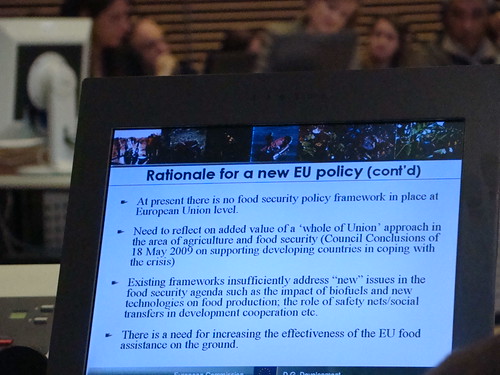
Food Security and Agriculture are very much back on the agenda. Building on its Food Security Thematic Strategy Paper 2007-2010, the European Commission is currently developing a new Policy Framework to assist developing countries addressing agriculture and food security challenges. On 9 december 2009, at the CTA organized Brussels Briefing “From Global Food Crisis to Local Food Insecurity”, the Directorate General for Development elaborated on its Issues Paper on food security.

DSC01913


The new policy framework will build on central elements of the past framework:

• The aim remains not simply to deliver food aid but to achieve Food Security for all
• Maintain a link between relief and protecting sustainable livelihoods and crisis prevention
• Address four pillars: availability (1), access (2), quality and utilization (3), and crisis management and prevention (4)

The Issues Paper was published 16 november 2009 and is part of the consultation and policy development process which has to lead to Council Conclusions – an official statement of the ministers of EU members states – on a Policy Framework on Agriculture and Food Security in May 2010.

Until 9 January 2010 you can voice you opinion about the Issues Paper at www.ec.europa.eu/yourvoice/consultations


Several participants at the Brussels Briefing organised by CTA commented on the presentation by the DG-Development representative. ActionAid welcomes the EC initiative but feels the Commission has no long term approach to investment in agriculture and food security. Also, according to ActionAid, the EC approach lacks attention for women’s access to credit, land and services. For example, compared to an earlier version, the chapter on agriculture has been removed from the current version of the EC Gender Action plan, a document stakeholders may comment on next week. ActionAid also warns about the so-called “whole of union approach” that the Commision wishes to explore in connection with issues of Food Security. This approach suggests that members states – besides official development cooperation - use all kinds of other resources to achieve development objectives. However, ActionAid and Concord are concerned that the "whole of the union" approach is more about “counting all resources” as opposed to really “using all resources”.

Subscribe to the euforic newsfeeds on food security and eu cooperation for more news

Wednesday, December 02, 2009

Members vote to dissolve the Euforic Cooperative

After nearly 15 years the Euforic Cooperative will disappear. Twenty-four members (out of 34) represented at the special general meeting of members, held on 26 November 2009 in Brussels, voted for the dissolution of the Cooperative.

Fifteen years ago, when the Internet started to become a key tool in information and communication, a diverse group of organizations in development cooperation acknowledged its importance for communication and collaboration and constituted Europe's Forum on International Cooperation (Euforic). Euforic was founded by ECDPM - independent, funded by governmental donors -, Clong, Eurostep, CIDSE and APRODEV - all NGOnetworks - and the ACP Secretariat - representing southern governments. The current group of members remains very diverse, including also a number of research networks and institutions.

In a joint effort the Web was used to communicate and to collaborate. Initially the focus was on sharing and disseminating information, over the last years Euforic supported members in using Internet interactively (Web 2.0) in support of networking and collaboration. Euforic always remained on the forefront in working with members on innovative projects and supporting them through training and consulting.

More recently, Euforic supported ICCO’s Compart project that uses Web 2.0 for collaboration and learning within ICCO and with its partners. With ILEIA a similar project was undertaken on a smaller scale. Euforic was also involved with CABI in setting up a repository storing products of all DFID funded research – Research for Development (R4D). In the process of transforming D-Groups, Euforic associates played a critical role. Similarly Euforic has been a partner in support of CTA’s Brussels Briefings since 2007. With NIAS and DDRN Euforic worked in 2009 on using Web 2.0 for communication of research. Campaigns and events were promoted through social reporting, working with FAO, GDN, Concord, IDS, Helvetas and CTA. In training sessions - either open, or targeted for specific clients – Euforic has been building capacities among a diverse groups of staff of member organizations. Euforic staff will work until mid December to transfer outputs of projects and completing work on the IKM-Vines project and the Brussels Briefings.

Funding Euforic has always been a complex issue. As a Cooperative it had limited income from membership fees which were always kept low as the Cooperative was supposed to earn its keep. The combination of a first class, independent public information service on Europe’s development cooperation while at the same time servicing the diverse membership as well as working with individual members on a project basis was not always easy to manage. Over a period of years deficits accumulated, a loan from one of the members allowed a re-start in 2006 but eventually the members agreed that there was no structural viability to the organization, at least not in this form.

To enable the Cooperative to pay all its outstanding debts and close with a zero balance, ICCO, ECDPM and EADI committed ad hoc contributions, at the same time APRODEV, CIDSE, Bernard van Leer Foundation and ISS doubled their membership contribution over 2009.

While the Cooperative is dissolved, there are also indications that – besides project outcomes and capacity development activities over the years - Euforic's heritage will live on: EADI has agreed to host the public information services that are provided through www.euforic.org. Also former Euforic staff and associates will continue to provide training and consulting services under the name 'Euforic Services' communicating through this blog euforic.blogspot.com.

Note: the liquidation also includes the sale of office furniture. For those interested, please click here.

Tuesday, August 25, 2009

DDRN workshop on communication in North/South research partnerships

Increasingly donors who fund development research programs stress the need to communicate about research priorities, programs and outcomes. Researchers themselves as well as intermediaries have an important role to play in this. Examples of donors with a strong interest in research communication are DFID, DGIS/WOTRO and Danida.

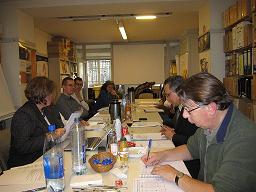
On 12 - 14 August 2009 DDRN, the Danish Development Research Network, convened a workshop in Tanzania to promote effective communication during and after the implementation of three new research projects in Tanzania for which Danida granted funding in 2008. The projects look at livestock, dried fruits and climate change and will be carried out in partnership with Danish universities.

The workshop addressed a variety of issues regarding research communication. Euforic and CABI, another Euforic member, developed and co-facilitated the workshop with assistance from staff of DDRN and the Danish Water Forum (DWF). Over 30 researchers and external stakeholders attended the workshop that was held at the Sokoine University of Agriculture (SUA) in Tanzania.

Drawing on the experience of the Euforic network and aiming to respond to the needs expressed by the participants, the event was designed tailor-made to cover the formulation of a framework communications strategy for each project and to elaborate some example communications products. Also included was a session on how to use the internet to disseminate and access research results.

The workshop began with an analysis of the various stakeholders of research projects and the aims of communicating with them. The goal of communication can be to change the behaviour of stakeholders, to raise awareness about specific issues, to encourage dialogue, or to collect needs. To reach such goals you need to be clear: What is it you want to achieve with your research communication? Who do you want to address? What is your message for them?

This first module of the workshop was followed by presentation sessions that drew on case studies of messages and channels for different communities and actors. In a variety of hands-on exercises participants worked on different products and media. A specific session on writing press releases was supported by a meeting with local journalists from the Tanzanian newspapers “Business Week” and “The Citizen”.


The workshop culminated in a presentation session entitled “The SuperProjects” in which the participating research projects made presentations based on their press releases and communications plans, illustrating the different impact of various styles of presentation. The peri-ubran livestock project illustrated a selection of target audiences and the messages and channels they would use to reach these audiences. The Dried Fruits project proved to be popular with samples of the product available for the audience to taste. The Climate Change study on Kilimanjaro was enhanced by spectacular images.

The workshop provided key documents, many produced by other Euforic members, and illustrated issues with videos from the euforic.blip.tv and r4d.blip.tv channels.

Earlier, Euforic was involved in launching the DFID Research Strategy works with CABI on R4D, a DFID funded project on research communication. Research communication was also a central theme at the June 2009 EADI IMWG-meeting supported by Euforic.

See also Euforic newsfeeds on information, knowledge, communication, and from the IMWG 2009 workshop

Tuesday, June 23, 2009

Towards an MDG plus agenda

At the After 2015 High Level Policy Forum, held in Brussels on June 23 2009, Andrew Steer (DFID) led through the third plenary session, which discussed the question ‘Towards an MDG plus agenda’?

Louis Kasekende, chief economist of the African Development Bank, called for a rethinking of pro-poor policies after the MDGs in Africa. Recent events have shown the fragility of Africa, reflected in the income inequality and the associated social tensions in Kenya or South Africa, the vulnerability to the food crisis, or the reversal of gains in just six months after the financial crisis on the entire continent. Consequently, Mr. Kasekende made three proposals on how to re-design the MDGs:
  • Refocusing economic growth: MDG 1 could be split in two goals, namely economic wealth creation and reduced inequality;
  • Focus on fragile states: Action may be needed beyond regional effort, because costs for the country and their neighbours are enormous once the country has fallen into fragility like Somalia, DRC or Zimbabwe;
  • Broaden ecological sustainability: for example by recognizing the danger of external shocks.
Claire Melamed (ActionAid UK) put forward several points, which should be taken into account in the MDG plus agenda:
  • Any new narrative has to increase the understanding of the realities of power and gender, which block poverty reduction;
  • We need to move to a global welfare state, which is characterized by social justice and redistribution;
  • We should stop looking at averages, but move forward to the individual level. Not the average national wealth counts, but we should commit to ensure every individual has access to basic minimum services and income;
  • Funding mechanisms should shift from uncertain aid provision to more predictable, redistributive mechanisms, such as innovative taxing;
  • The future MDGs should rather be based on rights instead of on charity.


Being the final speaker, Andreas Rechkemmer (UNU-IHDP) put the interrelations between environment and development to the fore. Ecosystems are the precondition for any human well-being, due to the provision of cultural, provisional and regulatory services. Therefore, development, climate change and ecosystem communities have to overcome fragmentation and instead join forces. Essentially, “it is all about resilience building at ecosystem and social system level”, Mr. Rechkemmer argued. We need innovation and social learning to design a transitionary regime which can address the MDG plus, global governance and climate agenda.

See also:


This project is co-financed by the European Union. The views expressed do not necessarily reflect the opinion of the European Commission

Development 'game changers' and the MDG plus agenda

At the After 2015 High Level Policy Forum, held in Brussels on June 23 2009, Jean-Luc Maurer, president of EADI, introduced the second panel which aimed to identify the key meta-processes shaping development (game changers) over the next 10-15 years and their implications on the MDG plus agenda.

Charles Gore (UNCTAD) claimed that the financial crisis is not simply a failure of the financial system, but rooted in the weaknesses and contradictions of the global development paradigm. These shortcomings include market fundamentalism, radical global income inequality, global interdependence without global institutions, the socio-institutional mismatch with the emerging new technological paradigm, and the environmental limits to growth.


So how can the current economic and development downturn be understood? According to Mr. Gore, there are long-wave cycles in development, also known as the Kondratieff cycles, of which one can last between 50-60 years.
  • The Kondratieff spring was experienced in the 1950s and 1960s, when national development and economic growth were predominant
  • The 1970s coincided with the summer, when economic growth was accompanied by redistribution
  • The autumn in the 1980s and 1990s was characterized by global integration and the Washington Consensus .
  • Since 2007, we are in the Kondratieff winter period, the focus lying on the Washington Consensus plus poverty reduction. In this downturn period, the MDGs are crucial to fill the gap to the next spring, which can be expected to start in 2012-15.
For Mr. Gore the way forward is not to abandon the MDGs, but to develop a new consensus on global sustainable development. We should embed the MDGs in a different policy narrative around productive capacities. MDGs could become social and economic rights which are guaranteed at the global level. In the long-term, they would not be financed through aid, but through innovative global sources of finance, such as taxes on global transactions.


Alfred Nhema of the Pan African Development Center highlighted the African view on the MDGs. Acknowledging that most African countries fail to achieve main MDGs, Mr. Nhema pledges for a coherent assessment of the current situation. How can Africa learn from other regions, such as Asia? Why did the past policies did not push Africa substantially forward on the way to reach the MDGs? Moreover, universal indicators such as the MDGs should be buttressed by locally defined measures. Public involvement from Southern peoples would be essential in the designing of a post-2015 framework.

Richard Morgan (UNICEF) argued that we need to “seriously review or even junk the results-based management approach of the MDGs”, because it is too far away from people’s real life. The basic needs approach and the participatory development approach would be good ways forward.

See also:


This project is co-financed by the European Union. The views expressed do not necessarily reflect the opinion of the European Commission

Impact of the MDG paradigm on poverty reduction

The first panel of the ‘MDGs After 2015’ event in Brussels on June 23, jointly organized by DFID, DSA, EADI, IDS, ActionAid and the Broker, focused on the impact of the MDG paradigm on poverty reduction.

Lawrence Haddad (IDS) introduced the topic by underlining that the preconditions for realizing the MDGs are very different from 2000, the year of their creation. Whereas the millennium year was characterized by growth and stability, our times today are marked by climate change, financial and economic crises, pandemics, and the rise of new economies. This triggers questions on the post-2015 MDG framework: “Should the MDGs focus on outcome or process, should they be global, national or local, should there be less or more accountability, and finally, should there be MDGs or not?”

Salil Shetty (United Nations Millennium Campaign) underlined the achievements of the MDGs from 2000 until 2009. We do not spend enough time on reviewing the successes, although “the MDGs help to make change happen!" Instead of being a 'straight jacket', they are a public good, which can be interpreted differently. However, he acknowledged weaknesses, such as the donor and state-driven and technocratic nature and the ignorance for processes of change and structural causes of poverty. As key challenges, he identified the economic, food and climate crises which create a 'cloud of uncertainties'. Successes have been the weakest in the areas of maternal health and child mortality, and the trade element of MDG 8. The action plan until 2015 should, according to Mr. Shetty, focus on the 'de-aiding' process of the MDGs, move action from the global to the local, and serious reporting.

Enrico Giovannini, the chief statistician of the OECD, clarified that the word ‘statistics’ actually comes from ‘science of the state’. What we need would be 'sotistics, statistics for the society. Further, confronted with multiple crises, he underlined that we need to develop a new narrative which goes beyond mere aid narratives. Equitable and sustainable well-being definitions should be participatory and decided on local levels. “We have to be careful in preparing the repeated game in 2015”, claimed Mr. Giovannini.

Sakiko Fukuda-Parr from the New School University, New York presented her analysis of how the MDGs have influenced policy priorities and Poverty Reduction Strategy Papers (PRSPs). On the one hand, the MDGs were created as a reaction to the Washington Consensus, instead embracing the idea of inclusive globalization. On the other hand, the strategies of the 22 researched countries focused on the Washington Consensus (liberalization and privatization with little government intervention) plus social investments. In this way, many PRSPs undercut inclusive globalization and counteract the driving motivation of the creation of the MDGs. Despite the lack of impact on policy and the development paradigm, the MDGs did have a huge impact at a normative level. They are a very powerful message, which succeeded to shift international norms, although in a truncated way. Finally, Mrs. Fukuda-Parr underlined that we have to recast the MDG agenda. Most importantly, we have to add a goal on reducing inequality.

See also:


This project is co-financed by the European Union. The views expressed do not necessarily reflect the opinion of the European Commission

Saturday, May 09, 2009

Development NGOs call on Europeans to vote against poverty

CONCORD has launched a campaign across the European Union to highlight the EU’s role in the world and encourage people to vote in the European elections on 4-7 June.

Called “10Days4Development”, this campaign encourages voters to ask their MEP candidates about what they intend to do to promote international development and to address climate change if elected. The campaign runs from 9 till 18 of May.

All around Europe, international development NGOs are organising activities, including public meetings, meeting with politicians, campaigning stunts, opinion polls and so forth. Voters can get information about the activities taking place in their country by visiting

http://10days4dev.wordpress.com

For more information, check out Euforic's newsfeeds on Concord and the EU elections

Monday, May 04, 2009

Learning about gender mainstreaming in the World Bank

“You need money to mainstream gender, not much, but you do need money” was the critical lesson Ms. Mayra Buvenic, Director for Gender and Development at the World Bank shared with gender focal points of Brussels-based development NGOs at a meeting on 4 May 2009. The informal exchange of experience was organized by Concord and hosted by Aprodev. Members of the Concord Working Group on Gender and other participants learned about the recent work of the World Bank in this domain. At the same time, Ms. Buvenic was briefed on Concord activities related to gender equity in EU development cooperation and external relations.

De World Bank Gender Action Plan 2006-2010 is based on three key elements:

  • A focus on economic sectors, a key area for the Bank
  • A business case approach (“we show people in the Bank that gender equity pays”)
  • Financial incentives to promote attention for gender

The World Bank plan is entitled "Gender Equality as Smart Economics". According to Ms. Buvenic, it works. Until now, donors - including the World Bank - have pledged 60 million US$ to the programme and within two years the number of World Bank operations in economic sectors that have moderate or detailed gender equity components has risen from 25% to 34%. In World Bank terms the Gender Action Plan is a small program, if not minute. But the key is that the grant programme leverages money and involves staff previously not engaged with gender. The grant money is allocated internally with WB-task managers submitting proposals. Over 70% of the proposals that were honored in the last round, came from staff who had never before been involved in gender.

For the future Ms Buvenic indicated that it was essential that in the next replenishment of IDA (International Development Association - IDA-16) significant funding becomes available for gender. Also she announced that a future World Development Report was going to be dedicated to gender.

Eef Wuytz (International Planned Parenthood Federation - IPPF), representing the Concord Working Group on Gender, indicated that gender equity will be a key priority for Concord in its new Strategic Plan. The Concord Working Group currently undertakes various activities such as monitoring the development of an EU-EC Gender Action Plan for Equality and Empowerment in External Relations. This joint initiative of Council and Commission was launched last year and is evolving slowly – quite slowly actually. Ms. Wuyts expects that the Council and the Commission will adopt this comprehensive Gender Action Plan early 2010 during the Spanish Presidency.

More on gender and EU development policies is available on the websites of Concord and WIDE

See also Euforic's newsfeeds on Concord, Aprodev, and gender


Friday, February 20, 2009

Nordic organisations join Euforic

In January, the Euforic Board approved membership applications from the Danish Development Research Network, the Nordic Institute of Asian Studies, and the Norwegian Agency for Development Cooperation (Norad).


DDRN is a network linking research-based knowledge and development within the sectors of agriculture, environment, and governance. Members are drawn from the research community, the private sector, NGOs and development organisations. Its objective is to contribute to the inclusion of research and research-based knowledge in development assistance and in partner countries’ development activities.


NIAS is a Nordic research and service institute with an international mandate and a focus on political, economic, business, social and cultural transformations in modern Asia in their historical contexts. It works closely with partner universities in the Nordic region to develop critical mass in and add value to research initiatives on modern Asia and to promote synergy and growth in Asian studies, and it provides a window to the Nordic countries for research-based knowledge and information on Asia.


Norad is a directorate under the Norwegian Ministry of Foreign Affairs (MFA). Norad's most important task is to contribute in the international cooperation to fight poverty; it contributes to effective management of development funds and ensures that the Norwegian development cooperation has high quality and is evaluated.

Chris Addison visited Copenhagen and Oslo in December 2008.

See Euforic newsfeeds on research, DDRN, Norad, Norwegian cooperation, and NIAS. Also news from Euforic members

Friday, February 13, 2009

European InternetWorking for Development: EC-funded Euforic project starts in 2009

In 2009, Euforic starts a new project co-financed with the European Commission (EuropeAid), ICCO and other partners. The action is funded for three years in response to a call for proposals on actions supporting 'Non-State Actors and Local Authorities in Development - Coordination, Cooperation and Networking Activities in Europe.'


The project particularly focuses on the use of social media (see recent projects) by Euforic and its members - particularly in opening up the reporting of meetings and helping information to travel.

The project is led by Euforic and ICCO, with close involvement of other members and partners of Euforic.


The project intends that:
  • Euforic members successfully use the Internet to enhance the impact of face to face events they organize to exchange information and experience to advocate and influence policies, or to communicate with wider publics;
  • European non-state actors in development commonly and effectively use low cost online social networking tools to collaborate and communicate and that they are supported by a virtual community of specialist-users within their networks.
The project has four components:

1. F2F+ (Face to Face plus) – Through the project, we will help ensure that at least nine significant face-to-face multi-stakeholder events on issues relevant to EU development policies reach virtual audiences at least 10 times the actual number of face-to-face participants.

2. Web2ToT (Web 2 Training of Trainers) – Through the project, at least 50 organizations (both Non-State Actors and Local Authorities) particularly in New Member States will be enabled to actively use free or low cost Internet tools and services to enhance how they create, exchange and communicate knowledge and how they engage in intra-network and multi-stakeholder collaboration.

3. KnowHow2Share – Through the project, Euforic and its ‘network’ members will use social networking tools strategically, having developed new, cross-sectoral network relations.

4. REACT - Through the project, we will compile and disseminate action research findings on the use of Internet and web2 in networking for development among actors in Europe.

The project will be formally launched in April 2009.

More:

Wednesday, February 04, 2009

Natural resources - blessing or a curse?

Speaking at the GDN conference in Kuwait, Albert Zeufack argues that natural resources can be a blessing for development, but most of the time they are a curse:


Tuesday, February 03, 2009

Rosien Herweijer joins Euforic as Managing Director

The Euforic Board has appointed Ms. Rosien Herweijer to a part time role as Managing Director of Euforic. She took up her post on 2 February, 2009.

Rosien worked freelance the past two years in Brussels, specializing in learning, change management and diversity in development organizations. She brings a wealth of development practice and management to Euforic, from her previous roles at PSO and posts in the Dutch Ministry of Foreign Affairs, SNV and UNDP.

Her prior role as Director of PSO Capacity Development is particularly relevant to Euforic – she brings us hands-on experience as a manager of a small NGO in development, covering all dimensions of the job including finance, personnel, communication, fundraising and strategic management.

Accepting her new position, Rosien told the Euforic Board “what I like about Euforic is that it uses technology - the Internet - for learning and sharing in development.”

Peter Ballantyne, Euforic interim manager and director since November 2005, will continue to work with Euforic in a senior programmatic role.

Monday, February 02, 2009

Natural Resources and Development - 10th GDN Conference

Six pre-conference workshops, four plenary sessions, some twenty parallels, and over four hundred participants: these are the impressive numbers of the 10th GDN Annual Conference taking place in Kuwait City, 1-5 February 2009.

The main theme of the event is "the crucial relationship between natural resources and development", and delegates will address this by discussing the political economy aspect of the issue, its the relations with sustainable development and the management of natural resource.

Among others, speakers include Ernesto Zedillo, Director of the Center for the Study of Globalization at Yale University, Justin Lin, World Bank Chief Economist and Senior Vice President, Paul Collier, Director for the Center for the Study of African Economies at the University of Oxford. See the complete agenda on the conference website.

Euforic's Chris Addison and Pier Andrea Pirani are participating in the conference and working with GDNet colleagues to 'blip' participants and to collect impressions, reactions and opinions on the issues discussed.

Follow the blog

View the blip interviews

Tuesday, January 27, 2009

Global Perspectives on what 2009 will bring us

The first issue of the magazine 'Global Perspectives' in 2009 reviews thepast year and looks at the challenges ahead.

Jeffrey Laurenti (Century Foundation) shows us his personal collection of good and bad events for world development in 2008, while philosopher Daisaku Ikeda reflects on 60 years of the International Declaration of Human Rights which was celebrated in December.

Assessing the achievements of last year but also looking at the challenges ahead, several articles deal with the international talks on climate change. Besides some insights from the Poznan Summit they look at the prospects for the upcoming conference in Copenhaagen.

A report by the Global Perspective Monitoring Unit shows the outlook for poverty alleviation in 2009. According to a World Bank Report, rapid growth will allow developing countries as a group to reach the MDG goal to halve poverty by 2015, despite the current financial crisis. However the Sub-Saharan African Region is predicted, notwithstanding gradual progress, to not to reach the target.

Global Perspectives is a bi-lingual (English/German) publication by IPS Europe. It releases monthly editions on various themes of international cooperation and development and is dowloadable for free.

See also the Euforic newsfeed on IPS Europe.

by Martin Behrens

Monday, January 19, 2009

Knowledge Share Fair for Agricultural Development and Food Security

This coming week, Euforic staff are attending and assisting at the Rome knowledge sharefair. More than 150 presentations (without powerpoint!) are scheduled covering all aspects of knowledge sharing in agriculture - from Bioversity, CGIAR, FAO, IFAD, and the WFP.

Euforic's Pier Andrea Pirani is 'blipping' participants for the '90 second challenge' - recording video responses to the question: "What's the added value of knowledge sharing to your work and your organization?"

Poland's Development Cooperation in 2007

Poland belongs to the group of new 'donors' in development cooperation. Some years ago it was still benefiting from external aid programmes. Now it contributes 2,5% to the European Development Fund, the largest amount among the new Member States and even more than established donors like Finland, Austria or Ireland.

The recently published 2007 Aid Report by the Polish Ministry of Foreign Affairs shows further progress on Poland's way to become a significant donor in international cooperation. In 2007, 0,09% of the GDP was spent on ODA, an increase of 9% compared to the previous year. Additionally USD 1.57 million were allotted to humanitarian aid and USD 1.08 million spend for food aid.

Polish aid is channeled multilaterally or bilaterally to developing countries and those under social and economic transformation. In line with the international development discourse, the report states that the Polish government is committed to concentrate on few target countries and a few sectors. Priority countries are Afghanistan, Angola, Georgia, Iraq, Moldova, the Palestine Authorities, Belarus, Ukraine, and Tanzania. However bilateral aid projects in 2007 were conducted in more than 90 countries.

53% of Polish Aid is channeled to multilateral organizations. Bilateral aid is provided through projects, financial aid (in 2007 preferential credits went to China, Montenegro, Uzbekistan and Nicaragua) and scholarships (mainly to Belarus).

According to the authors, the awareness and support among Polish citizens regarding the country's development cooperation is increasing. Considerable amounts were spent on development education projects and promotional activities. Furthermore the Polish Ministry of Foreign Affairs commenced preparations to launch a Polish Aid Volunteering Program to give Polish volunteers wider opportunities to work in developing countries.

See the Euforic newsfeed and dossier on Polish Development Cooperation

Wednesday, January 14, 2009

Development assistance in France and Germany - a plea for more cooperation

Harmonization and donor coordination are high priorities on the development agenda in Europe. A recent paper (pdf in German) by the 'German Council on Foreign Relations' (DGAP) explores the issue using the example of bilateral cooperation between France and Germany.

The paper describes the institutional framework which is the basis of the their development cooperation and sheds light on their policy priorities and regional focus. The authors come to the conclusion that both states hold a genuine position among European donor countries which is characterized by their absolute spending on development cooperation on bilateral, European and multilateral level, and their influence on the policy making of the European Union.

They show that close cooperation between the French and German administrations already exists through the so called Elysée Treaty, i.e. cooperation between the implementation agencies AFD and KfW. There is also regional cooperation, especially in the West African region.

The authors suggest a stronger focus on institutional reform in both countries to increase aid effectiveness and plea for even closer cooperation between France and Germany to accelerate the EU reform process and enhance cooperation between member states.

by Martin Behrens

Visit Euforic dossiers on French and German cooperation / Sign up for news alerts on French and German cooperation.

Monday, December 29, 2008

Dgroups – migrating to a new platform in 2008

During 2008, Euforic continued to provide overall coordination support to Dgroups - a leading discussion and community platform for many development actors (see 2007 report).

The main focus of 2008 was the platform itself and its migration to a new system and host. Early in the year, it departed IDRC for IGLOO – who hosted the ‘D1’ platform throughout the year. In mid 2008, the Dgroups Executive Committee selected WA Research to build the new ‘D2’ platform. It also recruited a small migration team to assist in the transition, due to be complete in February 2009.

The task was to build a new platform and migrate more than 2500 groups, some 110,000 individual users, and more than 40,000 shared resources (and in the process identify which groups were active, which could be archived, and which deleted).

By the end of 2008, the beta D2 platform was ready and many groups were already migrated in a test phase. The new platform immediately won over users with its fast and reliable email functionalities, a welcome improvement from an increasingly shaky D1 platform (which was already past its best).

The Dgroups blog has reports and milestones on the migration and build processes.

Alongside the platform migration, the Executive Committee worked to establish a Dgroups Foundation that could take on the independent ownership of the platform – and be the focus for the Dgroups partnership.

Euforic acted as coordinator and sub-contractor to Dgroups, nurturing the partnership and catalyzing the various steps along the way.

We look forward to having a more reliable platform, with added possibilities to mash Dgroups into other communication tools used by Euforic and its members.

by Peter Ballantyne

Sunday, December 28, 2008

Euforic goes Nordic

In December 2008, Euforic's Chris Addison contributed to several awareness and training activities held in Copenhagen and Oslo in December 2008.

He reported on the meeting facilitated by the Danish Development Research Network on the evaluation of research communications in early December (on communication M&E and communication success).

He also worked with the Danish Institute of International studies (already a euforic member) to establish their diis.blip.tv channel and report on their migration and climate change seminar. A series of sessions with DIIS researchers established their own virtual research desks, blogs and search engines.

A morning session at the Nordic Institute for Asian Studies covered an introduction to recording meetings on Blip.tv, the web2 high street tools and building a web presence rather than a site. One day at Norad included briefings to over 30 staff and work with individual teams on relevant tools and approaches to communicate, store and retrieve development related information.