Google+
Showing posts with label capacity building. Show all posts

Monday, May 12, 2014

Capacity Development 2 - Behavioural Competencies in a Digital World


There can’t be many tenser moments in life than following behind your child as she cycles, more or less steadily, on a main road towards a busy roundabout, and then wobbles as she raises her right arm out to signal and turns her head quickly to try and spot a space in the stream of cars coming up behind. And then there’s the time she sets off alone with her friends to do the same route and you have to trust that she has learnt enough traffic sense to be able to negotiate the same roundabout on her own or, and this is the final ‘wake in the night rigid-with-fear’ moment, that she’s developed enough in all the senses necessary to be able to react quickly and intelligently to the unexpected, which the complexity of the human-machine-environment interface is likely to throw at her. So if you’ve ever helped a child to ride a bicycle then you’ll know with aching certainty that simply learning how to stay upright on two wheels while moving forward is only the first step in absorbing a whole new way of behaving, indeed being.

It’s very similar – though with little of the accompanying tension and heartache – to working with people as they learn to navigate digital technology and its extension, software programmes. ‘Technology Stewardship’ involves a certain amount of simple skills training but is much more about working with people as they navigate into a new way of being that involves using technology and interacting with software. And operating online, in social media and other web spaces, is analogous to cycling in a busy city, having to apply the simple skill-set in a dynamic context where the most complex and unpredictable element is other people. That complexity is one of the reasons we have embraced and promoted the notion of digital competencies as a way to frame the gamut of skills and behaviours involved in operating effectively as a digital citizen. There is a wonderfully rich visualisation of digital competencies in the JRC conceptual model (Ala-Mutka, 2011) 


We have written and presented elsewhere about this methodology, which informs a lot of our training work, but in this first part of a two part post we want to ground that concept in the underlying principles of the Behavioural Competency approach more generally and link it to the work we have been doing on conceptualising Capacity Development 2. And in a second post we will introduce an extension and update of our usual 5Cs framework.

The impetus for this post comes from our work with Itad and two associates on developing a framework for ‘Capacity Development 2’, as part of a brief for the UN Global Environment Facility (GEF). The brief arose as a follow-on from the IDS climate change knowledge exchange, where a colleague from the GEF Evaluation Unit recognized the potential of, among other things, the use of ‘Web 2.0’ tools and approaches in KM & Capacity Development. In the early part of the brief the Itad team quickly widened the scope of the work from technology 2.0 to a more holistic exploration of contemporary approaches to Capacity Development. As part of this we concentrated on the underlying principles of competency-based approaches, the focus on how people behave towards each other and their work. This, of course is in marked contrast to the skills training that can be seen as a typical activity of a CD1, where participants are ‘taught’ how to complete definable tasks and activities. “A competency is more than just knowledge and skills. It involves the ability to meet complex demands, by drawing on and mobilizing psychosocial resources (including skills and attitudes) in a particular context” (OECD, 2005:4).

To say ‘Susheela is a competent manager’, for example, is both a compliment and a description of a set of behaviours. It implies that Susheela has learnt a range of skills in dealing with complicated tasks – constructing and monitoring project budgets, for example. But is also implies that she performs those skills well in a complex context, for example: working with a range of people and organisations; aligning what she is doing with the strategic and operational requirements of her own organisation; bringing to bear her own experience and knowledge, learned mostly from different contexts. Defining, measuring and developing such a collection of learned behaviours and skills is the essence of competency-based approaches that have been central to much Knowledge Management (KM) and Human Resources Management (HRM).

The assessment of observable behaviours, as part of a Behavioural Competencies Framework, is widely used in staff management systems. The United Nations Competency Framework, for example, includes desired competencies such as, “teamwork: supports and acts in accordance with final group decisions, even when such decisions may not entirely reflect own position”. We suggested in our paper that, “the behaviours which might be a product of a CD2 approach, for example, could include collaborate within and across teams and organisational boundaries or tell stories and identify shared purpose through narrative.”

Behavioural competencies are a crucial link between individual and organisational and network levels of capacity development. Behavioural competencies also contribute to and are enabled or blocked by the wider enabling environment. For example, the UN framework referred to above includes the indicator, “gathers relevant information before making a decision”. However, this is evidently dependant on the availability of accurate information. And the study revealed that, unsurprisingly perhaps, the concept of competencies as a frame for engaging with capacity holistically, is still to be embedded in the work of the GEF. For example, competencies, albeit expressed vaguely (eg, “handling conflict”) are a focus in some cases but "the approach tends to be CD1 (train people) rather than CD2 (look holistically at the context and motivational issues relevant to a desired behaviour)."

In the next post we will focus specifically on digital competencies.

Friday, April 11, 2014

CTA web2.0 and social media trainings - What have we learnt?

Over recent years, CTA web2.0 and social media training programme has become a flagship initiative of the organization, receiving positive feedback from participants and host institutions and being awarded the WSIS Project Prize 2013 in the category e-agriculture.

While we are in the process of finalizing the evaluation of the second phase of the programme (2011-2012), I was recently invited to present and discuss the initial findings of the evaluation with CTA staff and managers.

 
Web 2.0 and social media capacity building initiative - What have we learnt over the period 2011-2012? Results of an impact study from Euforic Services

A few of the headlines emerging from the evaluation are:

  • There is general, high satisfaction of how the training is conducted and its content; 
  • Participants describe the training events as an eye opener and they feel inspired by the potential of social media to support their work;
  • The trainings work for improving participants' social media skills and knowledge;
  • Face-to-face trainings perform better than online trainings in terms of adoption of different social media tools;
  • There is a clear ripple effect, with the training being replicated (in different forms and degrees) by participants in their workplace or with their own partners;
  • Institutional adoption of social media is increasing, but only a few organizations use social media in an advanced way.
  • Resistance to change and lack of management support are the most common challenges to social media adoption.
Some recommendations include:
  • Putting more resources into the documentation and sharing of success (and failure) stories of putting social media to work in the agricultural sector;
  • Investing in a training of trainers programme, to expand the formation of a solid base of trainers across the ACP countries;
  • Sensitize senior and middle managers on the advantages of social media.
The meeting provided a good opportunity for CTA staff to reflect on what has been done so far in the programme, and discuss how to take it forward.

 - 


Wednesday, January 16, 2013

Evaluation of CTA web2.0 and social media trainings 2008-2010


One of the most interesting piece of work we carried out in 2012 was an evaluation for CTA of its web2.0 related capacity building events (2008-2012). The goal of this study was to learn from three years of this web2.0 and social media training programme; to understand which demographic is the most enthusiastic adopters of web2.0 tools, and the impact that digital tools have in terms of personal development and institutional changes.

CTA Web2forDev Training Opportunity - Photo credits: Web2forDev website

Today, a blog post on Web2forDev summarises the main findings of the study:
  • Between 2008 and 2010, CTA delivered 20 web2.0 related capacity building events, reaching a total of 510 trainees from over 20 ACP countries, mainly in Africa
  • Not surprisingly, trainees under 36 are more likely to adopt web2.0 applications, except for online social networking, which interestingly was not affected by age;
  • Female trainees have higher adoption rates than males for almost every web2.0 application;
  • Trainees working for NGOs and national and international organisations are more likely to adopt web2.0 tools than those in educational and research institutions;
  • Nearly 90% of trainees have improved their capacity to search for, access and share information;
  • The use of the iMark module is the preferred way chosen by trainees to introduce colleagues and co-workers to social media;
  • Bringing about systematic adoption of social media in institutions is much more challenging.

The article has generated some interesting comments and discussions, both on the Web2fordev website as well as in Web2forDev community on Dgroups.

A follow up post will soon be published to presents some of the recommendations included in the final report.
 - 

Tuesday, April 10, 2012

Participative Video & learning participatively

I spent a week with InsightShare learning how they facilitate participative video projects. The programme itself was a model in participative learning and facilitation. As well as learning a lot about using and editing video films the excellent programme made me reflect as much on participative learning and appraisal as on using video in our work.

InsightShare is an acknowledged leader in this small, specialist but influential field. Over their 15 years they have developed a robust methodology for people with any level of skills, including no previous experience of ICT, to be able to appropriate video story telling. In this context that means finding ways to ensure the people involved in a programme not only know how to use technology but packing a lot into a small number of weeks. For example, understanding and learning tools to develop storylines collaboratively with other people – members of a community or a team – is as important as learning how to use the technology. Transcribing and translating interviews accurately for subtitling is as important as learning to tell stories in images. And, as InsightShare emphasise in their introductory video, "it is about more than video, it is about getting people to unite and plan together to make change in their communities."

The emphasis on collaborative development of the story and the film is one of the things that sets it apart from social reporting and citizen journalism, two developments in which we’ve been very involved. The other touchstone issue is control of the editing process, and the amount of editing that is involved. For the kind of rapid-fire, low tech, mobile phone or digi-camera style approach that we have promoted simple editing packages such as Windows Moviemaker (found on any Windows PC), and iMovie (the Mac default editor), are quick to use for basic web publishing. InsightShare have generally aimed to produce higher quality video, better suited for displaying at conferences or events, or indeed broadcast. That means they use better quality cameras which have connections for external microphones. That opens up the process massively, since shotgun, boom or handheld mikes make possible the development of storylines involving multiple people, groups and locations (though attaching mikes to phones is also possible as I was taught at MobileActive 08) For editing, InsightShare encourage the use of packages such Final Cut Pro (for the Mac) or a package of a similar quality for the PC, starting with software like Sony Vegas going up to the achingly expensive Adobe suite.

InsightShare started before the term citizen journalism appeared, indeed before the mobile-phone explosion, and their approach is based on the idea that good quality video films enable people to tell their own stories effectively. Their innovation was to integrate long-standing good practice in participative facilitation, exemplified in resources such as the excellent Participative Learning and Action publications, with grassroots documentary making. They have developed tools that help people not only take good quality video but to structure stories meaningfully and take control of editing. And they have demonstrated how this can work with the complete range of development actors, as can be seen from the many superb examples on their site.

Participative Video (PV) has its drawbacks and critics, of course. The approach maximises the likelihood that there will be a genuine handover of control from the facilitators to the participants, and that they will have the skills and resources to appropriate the media properly. However, as in all participative processes, external facilitators and projects are presented with a power structure and culture to which they react. Increased ownership and control is at the core of PV but we have to ask by whom and how widely. And PV is a large investment for the institutions and people involved, not only in equipment but in the time involved. InsightShare’s introductory courses range from two to four weeks, and they support the groups they have worked with over a much longer period of time, trying to develop hubs to support programmes in other parts of the world. But sustainability is nonetheless a major issue. Maintenance and replacement of expensive equipment is a standard constraint for any ICT4D project, while the process itself, the collaborative story creation and film development, is a hard ask for small NGOs or busy communities. But then neither of those is a reason not to provide opportunities for people to learn new skills and stretch their understanding of how they can communicate what is important to them.

I am particularly interested in the space between citizen journalism or social reporting and PV. The approach and tools for engaging people in a longer-term, deeper communication or KS process which InsightShare  have fire-tested over the years are applicable in a wider set of contexts, using a mix of technologies. That is the area I shall be exploring in a second post. Meanwhile, sit back and enjoy.

Thursday, July 09, 2009

Positive results for MDF over 2008


The Management for Development Foundation (MDF) - one of Euforic's members based in the Netherlands but with antennas in Brussels, Asia and Africa - has just released its Annual Report 2008.

MDF supports the enhancement of management practices, capacities, and skills within organisations active in the area of development and international cooperation, applying a specific and client-focused approach. Its clientele ranges from multilateral organisations to small NGOs, both in the South and in the North.

The past year has been rather positive for the organisation, showing a steady increase in activities and turnover, plus some changes in its operational management.

Check also the Euforic newsfeeds on MDF and on capacity building and cooperation management

Tuesday, June 09, 2009

Diplo Foundation - Education for Globalisation

Diplomacy isn’t an immediately obvious candidate for consideration in the intense competition for international development funds and attention. Yet small and developing states can be enormously disadvantaged in international relations because they simply don’t have enough trained and knowledgeable people to represent their interests in crucial negotiations about global policy and practice. The enormous financial and human costs of participating in traditional training and Education in Diplomacy and International relations, generally located in expensive Northern centres, worsens the imbalance.

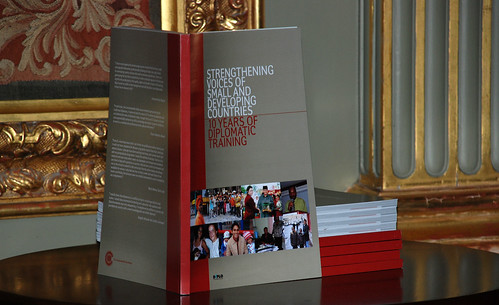
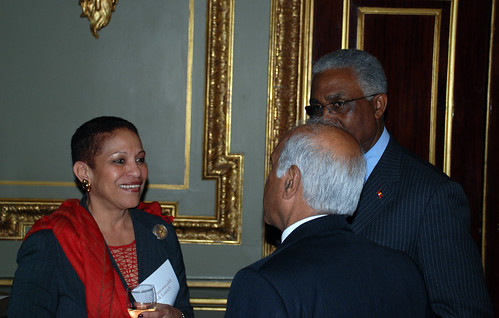
To address these problems the Diplo Foundation began providing high quality training and education in International Relations using modern ICTs to enable participation by Southern populations. Their work has been supported by a range of Governments and Agencies, including the Commonwealth, who hosted a reception in the gilded central hall of Marlborough House in London to mark ten years of collaboration. We were celebrating the major impact that this work has had on the lives of many of its participants, described in a publication launched at the event and in speeches from, amongst others, the Commonwealth Secretary-General, HE The Swiss Ambassador to London and the UK High Commissioner for Malta. The Secretary General was clear about the impact of the training:


Diplo has a number of lecturers who were themselves trained in the programme. Uchenna Okoli, a Nigerian graduate of Diplo, closed the presentation with a moving speech about the impact on her life. Here she talks about how it transformed her career and the key benefits of the training.


by Pete Cranston, Euforic Associate

Check also the Euforic newsfeeds on the Diplo Foundation and on capacity building